The PSSE-Schroth method by Nikos Karavidas is a modern Physiotherapeutic Scoliosis-Specific Exercise (PSSE) approach for the individualized, non-operative treatment of scoliosis, kyphosis and spinal deformities.
Built upon the fundamental principles of the original Schroth method, PSSE-Schroth integrates contemporary scientific evidence with advanced clinical reasoning, algorithm-based curve classification, individualized three-dimensional correction and structured treatment decision-making.
The method was developed to provide clinicians with a comprehensive and adaptable framework that goes beyond the application of predefined exercises. Its objective is to help therapists understand the individual characteristics of each spinal deformity and translate clinical and radiological findings into an appropriate treatment strategy.
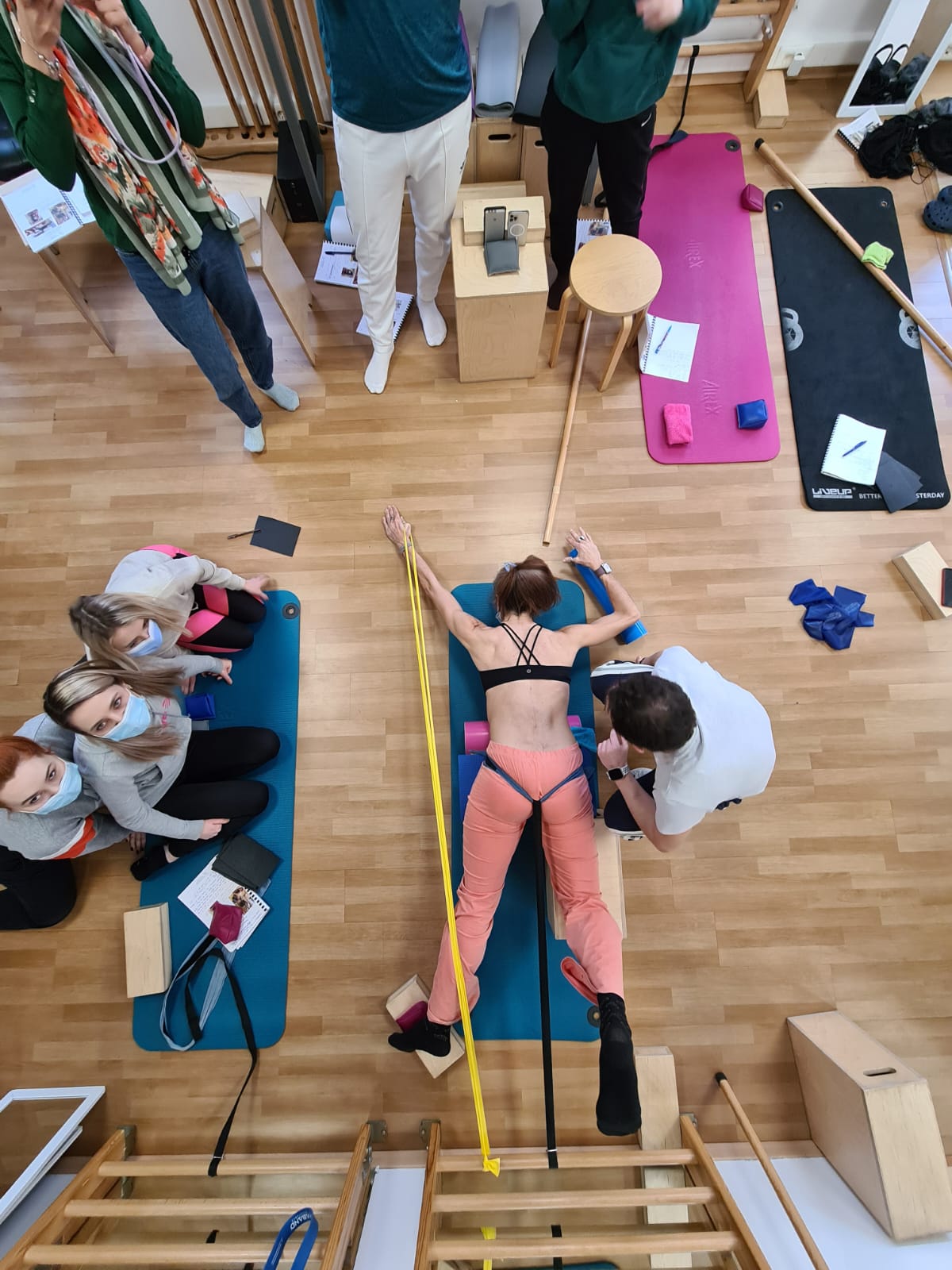
PSSE-Schroth preserves the fundamental principles of the original Schroth method, including three-dimensional self-correction, scoliosis-specific breathing, postural correction and stabilization, while expanding them through contemporary clinical reasoning and individualized treatment algorithms.
The method also integrates selected concepts from other established PSSE approaches, together with functional movement and selected Pilates principles and equipment, to broaden the therapeutic possibilities for mobility, neuromuscular control and functional stabilization of three-dimensional correction.
Rather than applying the same correction or exercise strategy to every patient, PSSE-Schroth uses assessment, classification and clinical decision-making to determine how, why and when a particular corrective strategy should be selected.
The PSSE-Schroth method meets the criteria for Physiotherapeutic Scoliosis-Specific Exercises (PSSE) described by the Society on Scoliosis Orthopaedic and Rehabilitation Treatment (SOSORT) and the Scoliosis Research Society (SRS).
At the core of PSSE-Schroth is its own structured curve-pattern classification system, designed not simply to describe the spinal deformity but to guide treatment through a simple and reproducible decision-tree algorithm.
Rather than relying primarily on visual pattern recognition, the classification integrates clinical and radiological parameters including curve location and magnitude, trunk rotation, balance, pelvic position, flexibility and structural characteristics. These findings are translated through the decision-making process into an individualized three-dimensional correction and treatment strategy.
The PSSE-Schroth classification has also been evaluated in peer-reviewed research, demonstrating excellent inter- and intra-rater reliability.
PSSE-Schroth incorporates structured clinical decision-making algorithms that translate assessment and classification into individualized treatment strategies.
A distinctive component of the method is its concept of selective overcorrection. Rather than prescribing maximum overcorrection indiscriminately for every curve pattern, a specific algorithm for overcorrection guides whether overcorrection should be applied, limited or avoided according to individual curve characteristics, clinical and radiological findings and prognostic factors.
This is particularly relevant in double or relatively balanced curves, where excessive correction of one component may potentially create or increase compensation elsewhere.
PSSE-Schroth translates classification into an individualized three-dimensional correction strategy.
Correction is adapted to the characteristics of the patient’s spinal deformity rather than following a standardized exercise sequence. Treatment incorporates three-dimensional self-correction, postural control and specific stabilization strategies according to the individual curve pattern.
A structured terminology and body-block analysis provide clinicians with a precise framework for describing the deformity and communicating the intended corrective strategy.

Corrective and rotational breathing are integrated into the three-dimensional correction according to the individual curve pattern and therapeutic objectives.
Therapist-assisted mobilization techniques can be combined with corrective breathing, positioning and active correction to facilitate the desired three-dimensional response.
Specific muscle activation strategies are then used to support and stabilize the achieved correction, helping the patient progressively develop active control of the corrected posture.
The objective of PSSE-Schroth treatment extends beyond achieving correction during a specific exercise.
Corrective strategies are progressively integrated into functional movement, postural control and activities of daily living (ADL), helping patients develop the ability to recognize and maintain improved alignment beyond the therapeutic setting.
Exercise selection and progression are individualized according to curve classification, clinical presentation, treatment goals and the patient’s ability to actively control the correction.
A distinctive development within PSSE-Schroth is the integration of scoliosis-specific Clinical Pilates into the individualized treatment framework.
PSSE-Schroth incorporates curve-specific exercises using Pilates equipment, including the Reformer, Cadillac, Spine Corrector, Ladder Barrel and Wunda Chair. Rather than applying generic Pilates exercises, exercise selection, positioning, resistance and assistance are adapted according to the patient’s PSSE-Schroth curve classification and individualized three-dimensional correction strategy.
The use of Pilates equipment expands the therapeutic exercise repertoire and provides additional possibilities for mobility, proprioceptive feedback, neuromuscular control and functional stabilization of three-dimensional correction.

PSSE-Schroth is designed not simply as a collection of scoliosis-specific exercises, but as a clinical reasoning framework for individualized conservative treatment.
The therapeutic process follows a structured progression:
Assessment → Classification → Clinical Decision-Making → 3D Correction → Individualized Exercise Selection → Functional Stabilization
This framework allows clinicians to adapt treatment according to the patient’s curve characteristics, clinical and radiological findings, prognosis, functional presentation and individual treatment goals.
The aim is to translate scientific evidence and PSSE principles into safe, precise and individualized clinical practice.
A dedicated PSSE-Schroth Patient Evaluation Form integrates clinical and radiological findings into a structured assessment process, helping clinicians translate evaluation, prognosis and curve classification directly into individualized treatment planning.
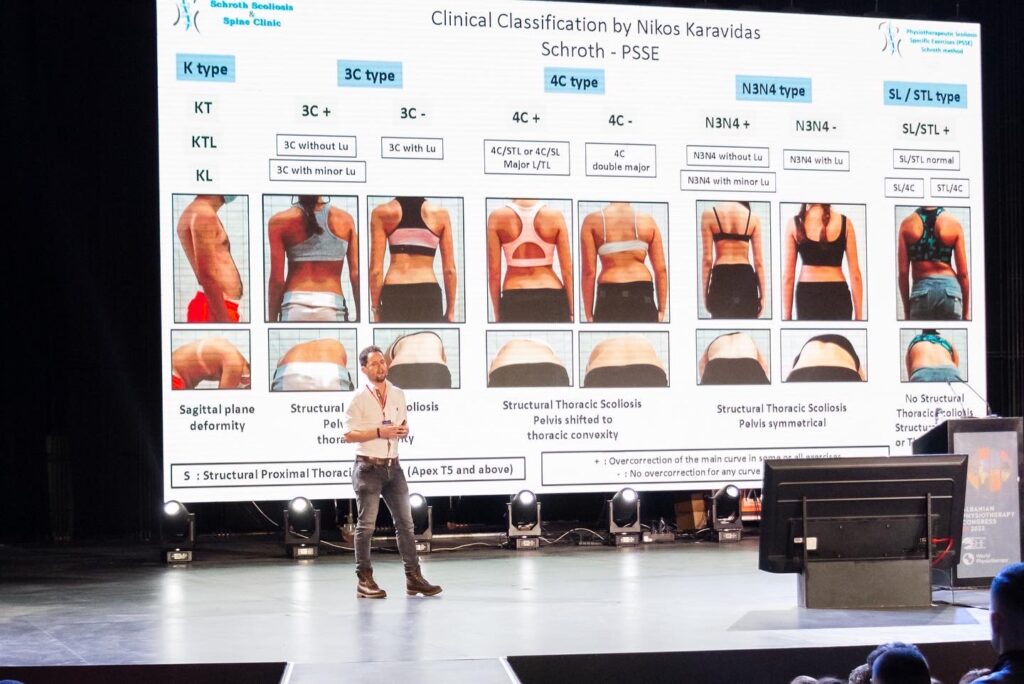

Founder and Chair of PSSE – Schroth method
The PSSE-Schroth method was developed by Nikos Karavidas, MSc, PT, a physiotherapist specializing in the non-operative treatment of scoliosis, kyphosis and spinal deformities and founder of the Schroth Scoliosis & Spine Clinic in Athens.
Having trained across the major Schroth-based approaches, including Schroth ISST, Schroth Best Practice and the BSPTS-Rigo Concept, Karavidas has combined extensive clinical experience, international education and scientific research in the development and continuous evolution of PSSE-Schroth.
He has been teaching scoliosis-specific education internationally since 2017 and is actively involved in leading international scientific and professional organizations dedicated to spinal deformity and non-operative care, including SRS, SOSORT, EUROSPINE and AO Spine.